
During a commercial teardown, asset recovery systematically extracts, processes, and reclaims valuable building components before and during structural demolition. High-value mechanical equipment, copper electrical infrastructure, and structural steel are salvaged for resale or scrap recycling, while clean concrete is crushed into road base. This process satisfies California’s 65% CALGreen landfill diversion mandate and generates commodity credits that directly reduce project demolition costs.
The Economics of Commercial Asset Recovery: How Salvage Lowers Demolition Bids
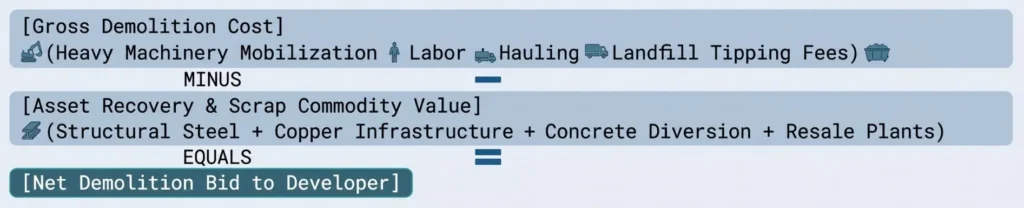
In commercial and industrial demolition, salvage is not an afterthought; it is a fundamental driver of competitive project bidding. When property developers, civil structural engineers, or general contractors solicit teardown bids across Southern California, the total line-item figure on the proposal reflects a net calculation rather than simple disposal pricing.
The Gross Bid vs. Net Bid Advantage
A standard structural demolition bid accounts for equipment transport, operating engineers, track excavator hours, fuel burn, trucking logistics, and municipal landfill tipping fees. However, when an experienced Class A engineering contractor audits the building’s structural and mechanical profile, high-value assets offset those operational expenses:
- Tonnage Offsets: Industrial facilities, mid-rise office buildings, and retail distribution centers house hundreds to thousands of tons of structural steel, rebar, and copper infrastructure.
- Direct Commodity Credits: Instead of treating these materials as waste, G&S Demolition values them against live regional commodity index prices. These projected revenues are credited directly back to the project ledger, substantially reducing the client’s out-of-pocket expenditure.
- Landfill Avoidance Savings: California tipping fees for unsegregated municipal solid waste remain among the highest in the country. By diverting up to 90% of demolition volume to dedicated aggregate crushers and metal processors, clients avoid tens of thousands of dollars in commercial disposal surcharges.
Pre-Demolition Asset Auditing and Plan Reviews
Accurate scrap credits require thorough pre-construction analysis. During initial structural blueprint reviews and site walk-throughs, estimating teams calculate material densities:
- Structural Takeoffs: Calculating linear footage and flange thickness of wide-flange I-beams, steel purlins, bar joists, and corrugated metal decking.
- Electrical Infrastructure Auditing: Quantifying high-amp copper bus ducts, step-down transformers, switchgear lineups, and heavy commercial feeder lines.
- Mechanical Plant Appraisal: Inspecting heavy rooftop chillers, package units, fire suppression pumps, boilers, and industrial diesel backup generators to determine whether they qualify for operational equipment resale or scrap commodity shearing.
Ready to evaluate your facility’s salvageable assets? Call (626) 316-3000 or email structural plans to gnsdemolition@gmail.com for an on-site commercial site walk-through.
The Tiered Asset Recovery Process: Chronological Execution
Safe, profitable material recovery does not happen by accident. Structural demolition contractors execute a phased deconstruction sequence to preserve material purity, eliminate contamination, and ensure site safety.
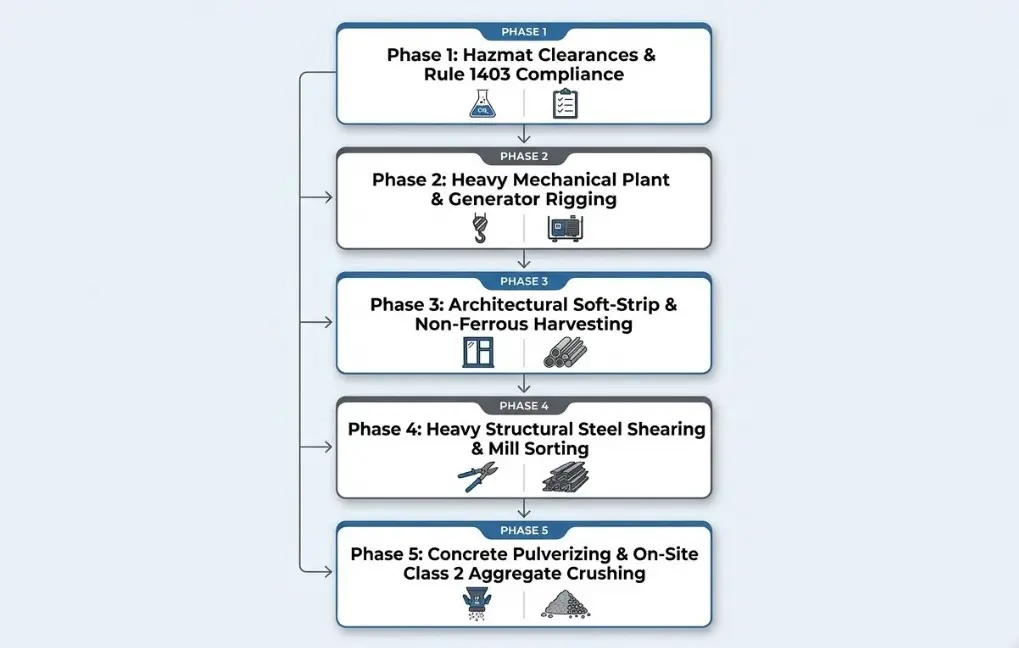
Phase 1: Soft-Stripping and High-Value Equipment Rigging
Before heavy excavators breach exterior building envelopes, interior rigging teams extract self-contained, high-value mechanical systems.
- Backup Generators and Switchgear: Large Cummins, Caterpillar, or Kohler industrial diesel generators are decoupled, drained of fluids, unbolted from vibration pads, and rigged onto lowbed transport trailers for domestic or international resale.
- Central Plant Chillers and Boilers: Commercial water-cooled chillers, cooling towers, and hydronic boilers are isolated, safely evacuated of refrigerant chemicals, and hoisted from rooftops or basement central utility plants using hydraulic mobile cranes.
Phase 2: Non-Ferrous and Architectural Harvesting
Once major plant equipment is cleared, crews harvest high-grade non-ferrous metals. Non-ferrous commodities hold exponentially higher price-per-pound value than basic structural iron and must be protected from contamination:
- Heavy-Gauge Copper: Main service entrance cables, distribution panel feeds, copper plumbing risers, and high-amperage copper busway systems are stripped, sorted, and palletized.
- Commercial Switchgear and Transformers: Substation transformers and dry-type step-down units are stripped for copper and aluminum windings.
- Architectural Glazing and Storefront Aluminum: Extruded aluminum curtain walls, storefront window framing, and entrance assemblies are extracted and baled for regional aluminum smelters.
Phase 3: Structural Steel Dismantling
With the building stripped down to its load-bearing framework, primary demolition equipment moves in. Track excavators equipped with 360-degree rotating hydraulic demolition shears slice structural members into standardized furnace sizes:
- Heavy Structural Sections: Heavy I-beams, columns, and plate steel are sectioned into 3-foot and 5-foot lengths (Prepared #1 Heavy Melting Steel) for direct domestic steel mill consumption or port export.
- Bar Joists and Decking: Lightweight steel framing, trusses, and corrugated roof decking are sheared and consolidated into prompt industrial scrap streams.
Phase 4: Concrete and Masonry Pulverizing
Foundations, tilt-up panels, and grade beams represent the largest physical volume of any commercial demolition project. Rather than trucking thousands of tons of raw concrete to landfills, modern engineering contractors process this material on-site:
- Hydraulic Breaking and Pulverizing: Excavator-mounted hydraulic breakers crack heavy foundations, while secondary concrete pulverizer jaws crunch concrete chunks, cleanly separating internal steel rebar and tension wire.
- Magnetic Rebar Separation: Heavy-duty cross-belt electro-magnets extract shredded rebar from the crushed material stream, routing the steel to metal recycling depots.
- Aggregate Crushing: Clean, fractured concrete is fed into track-mounted impact crushers with vibrating screen decks to produce certified Class 2 Aggregate Base (CAB).
Commercial Teardown Material Stream Matrix
The following matrix outlines how primary materials are categorized, processed, and valued during a full-scale commercial or industrial demolition project:
| Material / Asset Category | Extraction & Salvage Method | Downstream Destination / Processing | Commercial Economic Value |
| Heavy Structural Steel (I-Beams, Girders, Columns) | Hydraulic excavator shears, torch cutting, crane pick-and-lower | Regional scrap yards, domestic electric arc furnace (EAF) steel mills | High Tonnage Value: High scrap price per gross ton; primary contributor to gross bid cost deductions. |
| Commercial Copper MEP (Bus Bars, Feeders, Chiller Tubes) | Targeted mechanical pull, hand stripping, hydraulic cutting | Dedicated non-ferrous metal recycling facilities | Premium Unit Value: Highest price-per-pound asset on-site; critical for offsetting soft-demolition labor. |
| Heavy Mechanical Plants (Generators, Chillers, Boilers) | Crane hoisting, specialized equipment rigging, skid extraction | Secondary equipment liquidators, industrial plant resale markets | Variable Asset Value: Evaluated as functional hardware or scrap based on age, hours, and maintenance logs. |
| Reinforced Concrete & Tilt-Up Slabs | Hydraulic breakers, pulverizers, magnetic rebar extractors | On-site mobile crushing or licensed regional C&D recycling facilities | Operational Savings: Converted to Caltrans Class 2 base; eliminates landfill tipping fees and import haul costs. |
| Architectural Salvage (Storefront Glass, Aluminum Frames) | Manual extraction, hydraulic grapple segregation | Glass recyclers, secondary scrap aluminum reclaimers | Moderate Value: Aluminum extrusions yield steady scrap value; architectural glass diverted to specialized recyclers. |
| Mixed C&D Debris (Drywall, Ceiling Tiles, Roofing) | Bobcat loaders, demolition grapples, high-sided end-dumps | Licensed Material Recovery Facilities (MRFs) for automated sorting | Negative Net Value: Costs money to process; strategic separation prevents cross-contamination of clean salvage. |
California Regulatory Compliance: CALGreen Mandates and LEED Certification
Executing commercial demolition in Southern California demands absolute regulatory mastery. Developers face aggressive diversion requirements under state building codes and municipal green initiatives.
Navigating CALGreen Title 24, Part 11
The California Green Building Standards Code (CALGreen Section 5.408) mandates that commercial construction, demolition, and major renovation projects divert a minimum of 65% of non-hazardous construction and demolition (C&D) waste away from municipal landfills.
- Waste Management Plans (WMP): Prior to permit issuance by agencies such as the Los Angeles Department of Building and Safety (LADBS) or the City of Pasadena, contractors must submit an approved C&D Waste Management Plan identifying targeted diversion streams.
- Certified Weight Tickets: Every outbound load of concrete, asphalt, scrap metal, clean wood, and mixed debris must cross certified truck scales at licensed C&D processing centers.
- Final Compliance Verification: At project completion, the contractor compiles all certified weight tickets into an audit-ready reconciliation report. City inspectors will not sign off on final permits or release performance deposits without this verified documentation.
Generating LEED v4.1 Material and Resources (MR) Credits
For developers pursuing USGBC LEED certification, selective building deconstruction and high-percentage asset recovery offer vital points under the Construction and Demolition Waste Management credit:
- Targeting 75% to 90%+ Diversion: Achieving multiple LEED points requires exceeding baseline CALGreen targets, frequently demanding diversion rates of 75% across multiple material streams, or up to 90%+ for maximum credit allocation.
- Stream Segregation: G&S Demolition implements multi-bin and designated ground-stockpile sorting protocols on job sites, preventing contamination between clean concrete, scrap steel, and general debris to guarantee LEED compliance.
Hazardous Contaminants: The Gatekeeper of Salvageability
Materials cannot enter recycling facilities or commercial resale markets until they are verified free of regulated environmental contaminants. Attempting to shear, crush, or transport contaminated materials triggers severe regulatory penalties and immediate job-site shutdowns.
SCAQMD Rule 1403 Asbestos Survey Verification
The South Coast Air Quality Management District (SCAQMD) strictly enforces Rule 1403 across Los Angeles, Orange, Riverside, and San Bernardino counties. Rule 1403 requires comprehensive asbestos surveys conducted by a California Certified Asbestos Consultant (CAC) prior to any demolition activity:
- Thermal System Insulation (TSI): Older boilers, steam pipes, and chiller vessels wrapped in friable asbestos must undergo licensed abatement before structural teardown.
- Transite Panels and Roofing: Corrugated transite siding and asbestos-containing roofing felts must be systematically removed under negative air containment.
- Impact on Salvage: Scrap metal recyclers will reject any structural steel or piping displaying residual asbestos mastic or insulation. Verified Rule 1403 abatement clearance documents must accompany outbound scrap shipments.
Managing Lead-Based Paint (LBP) and Electrical Toxins
Vintage industrial and commercial properties built prior to 1978 present unique chemical challenges:
- Lead-Coated Structural Steel: Industrial steel framing coated in lead-based primers requires certified torch-cutting protocols or mechanical shearing. Demolition shears prevent lead vapor generation, keeping workers safe and avoiding hazardous waste classifications during transit.
- PCBs (Polychlorinated Biphenyls): Legacy transformers, high-voltage capacitors, and fluorescent light ballasts must be cataloged, tested for PCBs, and routed to EPA-approved hazardous waste disposal facilities rather than standard scrap recyclers.
- Refrigerant Evacuation: Commercial air-conditioning and refrigeration systems must have their CFCs, HCFCs, or HFCs evacuated by EPA Section 608 certified technicians prior to equipment dismantling.
Why Developers and General Contractors Partner with G&S Demolition
Demolishing a commercial complex, industrial plant, or retail center requires heavy iron, engineering expertise, and financial transparency. G&S Demolition Services delivers turnkey, incident-free demolition solutions throughout Southern California.
- California Class A Engineering Authority: Holding California State Contractors License CSLB #1142732 (Class A Demolition & General Engineering), we handle complex structural dismantlements, mass grading, and utility separations with precision.
- Pasadena-Based, Regionwide Reach: Headquartered at 534 N Fair Oaks Ave in Pasadena, CA, our dispatch teams serve Los Angeles County, Orange County, the Inland Empire, and the San Gabriel Valley.
- 100% Self-Performed Fleet: We own and operate our heavy machinery, eliminating third-party rental delays. Our fleet includes late-model Caterpillar and Komatsu track excavators equipped with dedicated rotating shears, concrete pulverizers, hydraulic breakers, and sorting grapples.
- Uncompromising Safety and Insurance Protection: Backed by over a decade of incident-free operations, we maintain comprehensive insurance portfolios: $1M+ Commercial General Liability, Comprehensive Pollution Liability, and Workers’ Compensation coverage.
- Audit-Ready CALGreen Close-Outs: We provide fully documented, certified weight ticket packages and diversion reports that consistently hit 80% to 90%+ landfill avoidance rates, streamlining municipal permit sign-offs and LEED submittals.
Frequently Asked Questions (FAQ)
Does the property owner or the demolition contractor own the salvageable materials?
Unless expressly stated otherwise in the commercial contract, ownership of all building materials transfers to the demolition contractor once possession of the site is formally granted. Demolition contractors account for the anticipated residual value of these materials during the estimating phase, passing the savings back to the owner as an upfront scrap credit that lowers the total bid price.
How does scrap metal recovery reduce the overall cost of a commercial demolition project?
High-tonnage ferrous materials (like structural steel columns and I-beams) and high-value non-ferrous metals (such as copper wiring and bus bars) are sold to licensed industrial recycling mills. The revenue generated from these commodity streams offsets equipment mobilization, operating engineer labor, and trucking costs, substantially reducing the project’s net invoice.
Can concrete from a demolished commercial building be reused on the same construction site?
Yes, on sites with adequate space, mobile impact crushers can process demolished slabs, tilt-up panels, and foundations directly into certified Class 2 Aggregate Base (CAB). This crushed aggregate can remain on-site to be used immediately for engineered building pad backfill, parking lot sub-base, or haul road stabilization, saving developers both export and import trucking expenses.
What documentation is required to prove CALGreen waste diversion compliance in Southern California?
Compliance requires a pre-construction Construction & Demolition (C&D) Waste Management Plan, followed by certified weight scale tickets collected from licensed Material Recovery Facilities (MRFs) for every outbound truckload. These scale tickets are compiled into a final certified diversion summary report that proves the project met or exceeded the mandatory 65% diversion threshold required for city building permit sign-off.
Can commercial HVAC units and industrial generators be sold for reuse rather than scrapped?
Yes, operational mechanical assets like industrial diesel backup generators, multi-stage air compressors, and late-model chillers frequently hold greater economic value in secondary resale markets than as raw scrap metal. During pre-demolition site audits, G&S Demolition inspects, documents, and evaluates these units to determine if equipment liquidation offers superior project cost recovery.